
Want to make a small charcuterie board for 2 to 4 people?
Charcuterie boards make an awesome no-cook meal, snack, or picnic - but instead of making an enormous spread, this tutorial will walk you through making a smaller board for just a handful.

Jump to:
What to include in a small charcuterie board
Where to start?
When crafting a charcuterie board for a few people, not a crowd, you definitely don't need the ample variety that you'd typically include.
Still, I have a few pointers for your board!
Charcuterie
First and foremost, you need charcuterie for a charcuterie board!
If you don't have cold cuts of meat on your board, it's not a charcuterie board (personal pet peeve, here).
Charcuterie can include:
- Salami
- Proscuitto
- Pepperoni
- Sopressata
- Capocollo
- Deli ham
Those would be the most traditional charcuterie, but in a pinch you can include other deli meats or proteins like:
- Sliced roast beef
- Deli turkey
- Smoked salmon
- Pâté
- Hard-boiled eggs
- Beef or turkey sticks, cut to smaller lengths if necessary
Cheese
Cheese is optional, here, but we all know cheese deserves a place on your charcuterie board (unless, of course, you're lactose intolerant).
Almost any cheese is game!
But here are a few go-tos for me:
- Sharp cheddar
- Goat cheese chevre
- Prairie Breeze
- Gouda
- Smoked cheddar
- Blue cheese (not too crumbly)
- Brie

Fruit and/or veggies
Fruits add sweetness (I am a HUGE fan of the salty/sweet combo!) and veggies add crunch and nourishment to a charcuterie board!
After all, if you're making a small charcuterie board or using it as a no-cook meal, veggies and fruits should definitely be included to make a balanced meal.
Here are my favorite fruits to add to a charcuterie board:
- Apples
- Pears
- Berries (blackberries are my favorites!)
- Grapes
- Figs (fresh or dried)
- Dates
- Dried cranberries or blueberries
On the veggie side, any vegetable that you like to munch on raw could have a place on a charcuterie board.
Some of my go-to veggies:
- Radishes (whole or sliced)
- Cucumber
- Tomatoes (especially cherry or grape)
- Broccoli Florets
- Cauliflower Florets
Crackers
If you'd like, you can omit the crackers, but who doesn't love to pile charcuterie and cheese on a cracker?
You can use whatever crackers or crunchy snacks you'd like, but some of my favorites are:
- Simple Mills Gluten Free Crackers
- Epic Provisions Maple Bacon Pork Cracklings
- Plantain Chips
- Nuts (toasted or raw)
Extras
- Fresh herbs
- Jams/jellies
- Olives
- Pickled veggies
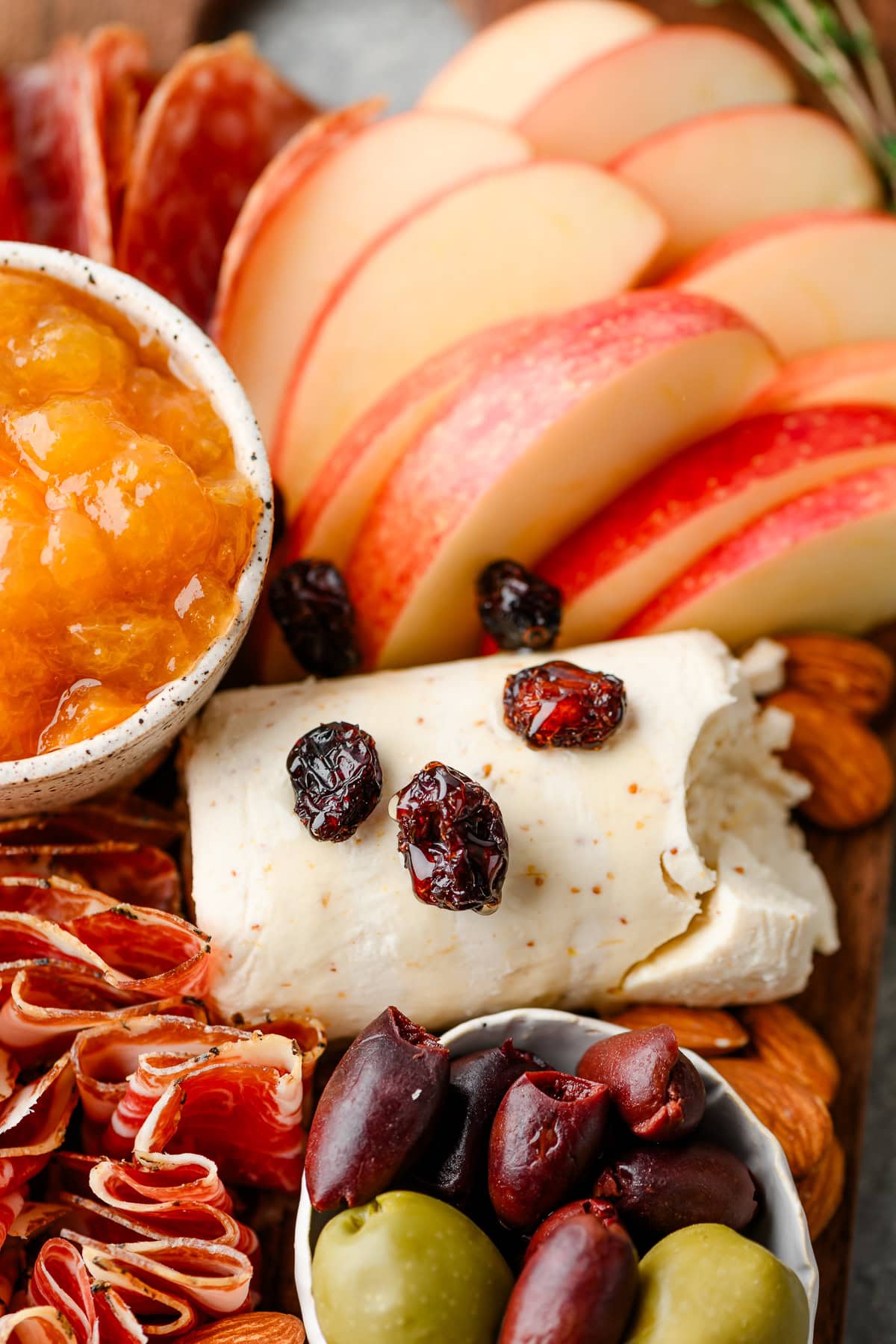
- Drizzle of honey (I often use this over goat cheese or other spreadable cheeses!)
How to craft a well-balanced charcuterie board
With so many options, how to you make a charcuterie board just for two? Including just one of the ideas listed above is not only too much, but too expensive.
So, here are some tips for putting together a well-balanced small charcuterie board!
- Keep the overall combinations of your board in mind
Before buying the different components, think about the overall flavors and combinations you want your board to have.
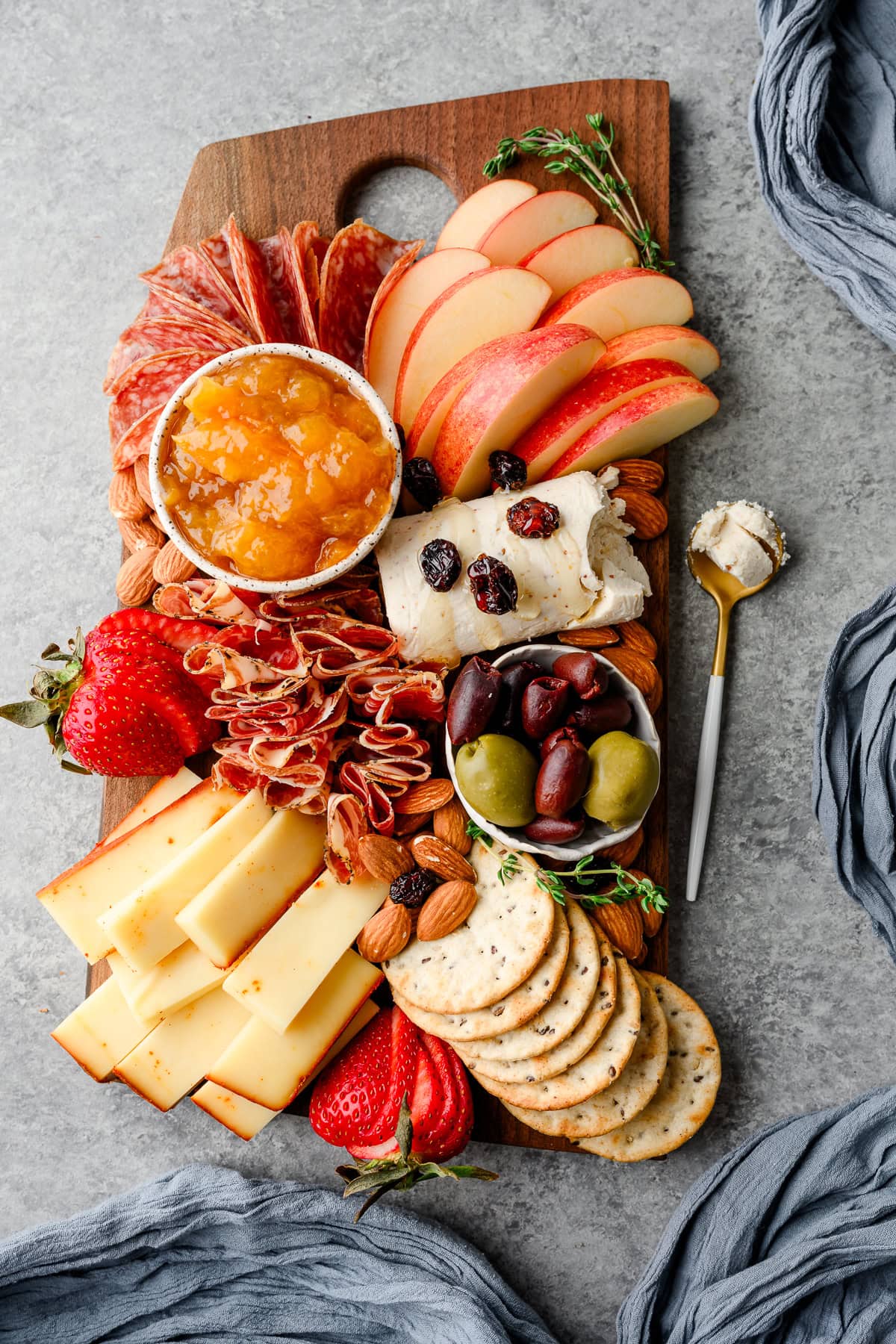
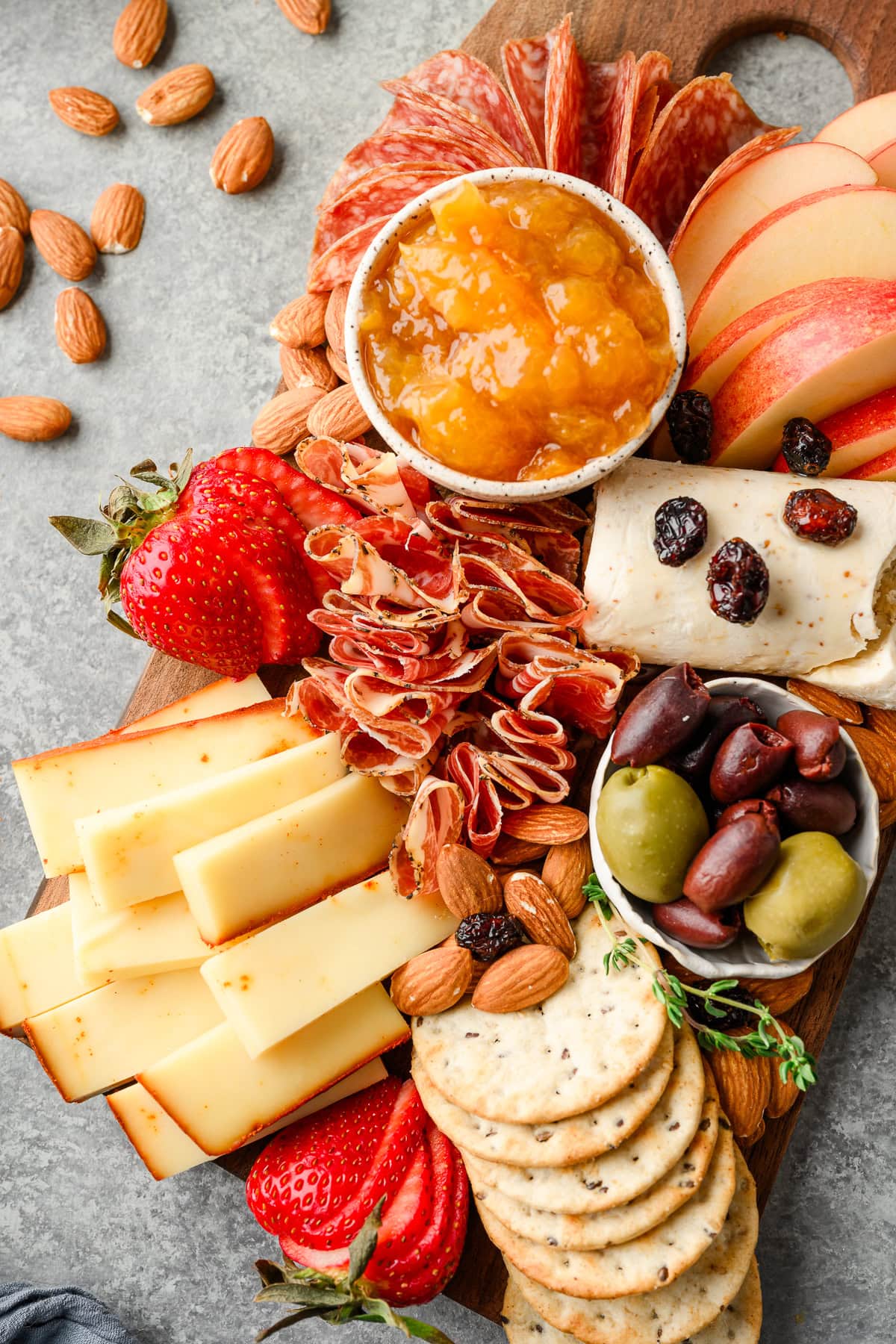
I put together two boards for the photos on this post, and they both are slightly different in their "flavor profiles," so to speak: one has a sweet & salty vibe, with salami, fruits, smoked cheddar, and honey goat cheese. The other was a "fancy" spin on a meat and cheese tray, with ham, smoked salmon, fresh veggies, crackers, and funky cheese.
The ham and cheese board wouldn't have made much sense with grapes and strawberries, and the salami board wouldn't have worked well with fresh veggies or super funky, overpowering cheese. Is there something to spread the goat cheese on or is it just...there to be there?
So think about the different bites someone might put together before buying ingredients for your board.
Cracker + cheese + meat is a classic, of course, but another winning combo is goat cheese + apple + salami.
- Variety in textures & flavors takes a charcuterie board from good to great!
When planning out your board, take care to include variety in textures and flavors of the foods included.
What the heck does that mean?
Soft, crunchy, crispy, spreadable textures. Sweet, salty, briny, toasty, meaty flavors. Adding a variety of these things (without going overboard) makes a "meh" charcuterie board into a "WOW" charcuterie board.
Think about it: a meat and cheese tray is just fine, but add crackers and sliced apples? Now it's WAY more appealing!
The additional tips below will help you get there!
- Pick 1-2 types of meat/cold cuts.
You don't need a ton of variety for meats/proteins, so choose your favorite 1-2 and roll with it!
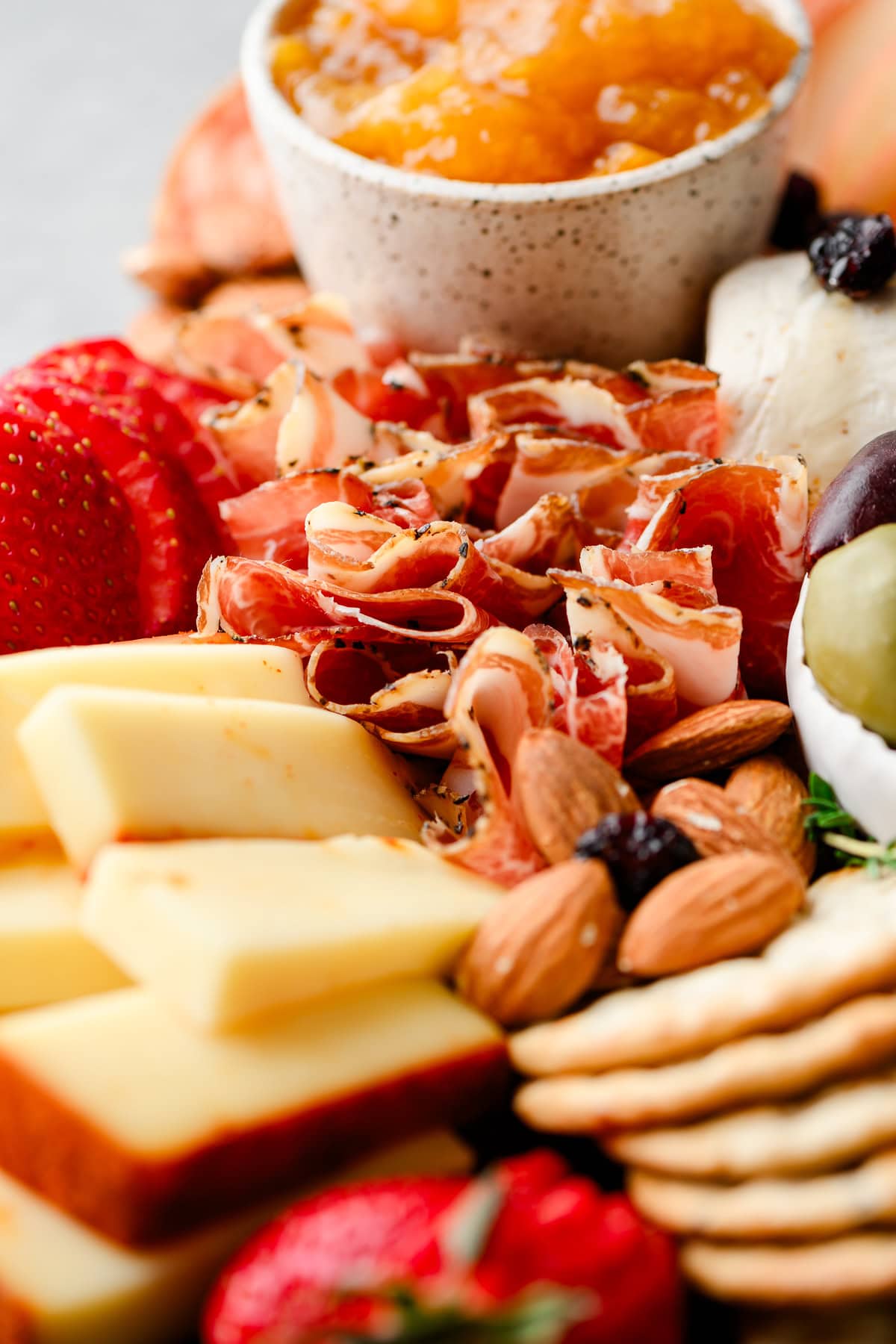
For one of my charcuterie boards for the photos, I went with just ham - for the other, more variety with salami and prosciutto.
An ounce or two of each is all you'll need!
- Choose 1-2 cheeses, ideally one soft and one hard.
I love pairing a soft, more spreadable cheese (like goat cheese or brie) with a harder cheese!
That said, you can pair classics like cheddar and swiss as well. Prairie Breeze is a favorite "fancier" cheese, and smoked cheddar also gets rave reviews!
If you or your guests are adventurous, incorporate a funky cheese. But for a smaller crowd (and a smaller charcuterie board), it's best to play it safe with your cheeses here!
- Include something crunchy.
Meat and cheese are both relatively soft, so balancing that out with something crunchy definitely makes a difference!
Raw veggies, crackers, apples, nuts, or pork rinds can all add some crunch to your charcuterie board.
A couple favorites of mine: sliced Granny Smith or Gala apples, cucumbers, radishes, toasted pecans or walnuts, herby crackers.
- Add sweetness with fruit or jams.
While this is optional overall, it's not for me - apple, cheese, and salami is one of my top combos of ALL time!
Plus, fruit has varied textures, so it can fill multiple dimensions of your board. Crunchy apples, sweet spreadable jam, or chewy dried fruits can all add different things.
For a small charcuterie board, one fruit/jam should be enough, but you can always add a little more if you'd like.
I often include sliced apple AND jam or dried fruit no matter how big my board is. Jam pairs well with spreadable cheeses, too!
- Bonus: a little brine goes a long way!
A little bonus tip: pickles, olives, or some other kind of fermented or pickled fruit/veggie adds some unique flavor (and can also add some crunch, too).
Just a small bowl of pickled veggies or olives offers a bit of salty, tangy variety without overtaking the board.
Ways to style a charcuterie board
I wrote a post with an in-depth guide to building an epic gluten free charcuterie board - that post has a deeper look into styling a charcuterie board.
But, here are the cliffs notes:
- Keep food groups apart: If you've got two types of meat, keep them apart. Same goes for cheeses and veggies.
You'll notice that on all the charcuterie boards on CJE, different meats are on different parts of the board, different cheeses are kept separate, etc. This not only is a visual cue that they're different (not all the meat is salami, for example), but keeps any part of the board from being too "samey."
- Meats and cheese are the anchors (usually): Place meats and cheeses first, then use all the other components to fill in.
The exception: I usually place any dishes (like small bowls of jam, for example) first, then add meats and cheeses around them.
- Fresh herbs, nuts, fruit, and/or pickles can fill in any gaps! You'll notice on many of my boards that the same nuts, berries, olives/pickles, or herbs show up in multiple places on the board. That's the secret to filling in some of those weird gaps and empty spots!
More charcuterie and grazing board recipes to check out
- Smoked Salmon Grazing Board with Herbed Goat Cheese
- Smoked Pork Platter with Mojo Sauce and Pineapple
- How to Build an Epic Gluten Free Charcuterie Board


📖 Recipe

Simple Small Charcuterie Board (+ Ideas)
- Prep Time: 20 minutes
- Total Time: 20 minutes
- Yield: 2-4 servings 1x
- Category: Dinner
- Method: No cook
- Cuisine: American
Description
Use this guide to create the perfect small charcuterie board for 2-4 people! This makes an excellent no cook lunch, picnic, or dinner. Be sure to read through the post for tips on pairing flavors and styling the board.
Ingredients
Meats: Choose 1-2, 2-4 oz of each
- Deli ham
- Salami
- Proscuitto
- Pepperoni
- Sopressata
- Capocollo
- Sliced roast beef
- Deli turkey
- Smoked salmon
- Pate
- Hard-boiled eggs
- Beef or turkey sticks, cut to smaller lengths if necessary
Cheeses: Choose 1-2, 2-4 oz of each
- Sharp cheddar
- Goat cheese chevre
- Prairie Breeze
- Gouda
- Smoked cheddar
- Blue cheese (not too crumbly)
- Brie
Fruits: Choose 1-2 (optional)
- Apples
- Pears
- Berries
- Grapes
- Figs (fresh or dried)
- Dates
- Dried cranberries or blueberries
Veggies: Choose 1-2 (optional)
- Radishes (whole or sliced)
- Cucumber
- Tomatoes (especially cherry or grape)
- Broccoli Florets
- Cauliflower Florets
Extras: Choose 1-4 (optional)
- Crackers
- Pork Rinds or Cracklings
- Plantain Chips
- Nuts (toasted or raw)
- Jams/jellies
- Olives
- Pickled veggies
Toppings/Garnishings: Choose 1-2 (optional)
- Fresh herbs
- Nuts
- Dried cranberries or blueberries
- Chocolate chips
- Drizzle of honey (I often use this over goat cheese or other spreadable cheeses!)
Instructions
- Choose the foods you'd like to include on your charcuterie board from the list above. Keep in mind that most charcuterie boards include meats, cheese, either fruits or veggies, and something crunchy like crackers or nuts. Use the toppings/garnishings to fill in gaps when putting together the board.
Leave a Reply